
Throughout history, sports or fitness in one form or another has been a popular activity in the Balkans. Likely the earliest strong push for sports being a normal part of society came during the height of the Roman Empire; Everyone is familiar with what sorts of extreme sports they liked… Fast forwarding centuries, sport has taken on a more integrated role in daily life in the Balkans, thanks in large part to the pre-1990’s state sponsored sports programs.
As an example, in parts of Bulgarian tradition and possibly in day to day village life, fitness came in unexpected forms. Farming work often replicated what is done in gyms now; Sheep often were carried on a person’s shoulders out of necessity, among other examples of work having the same result as focused, isolated fitness methods like we have now.
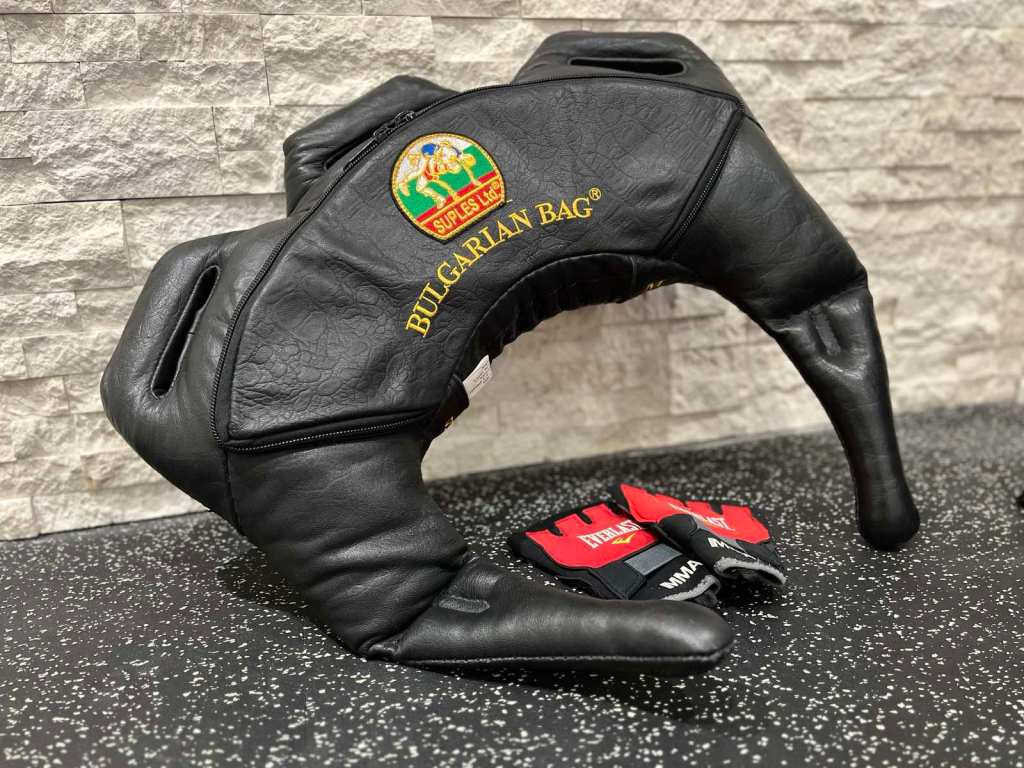
Today, nobody needs to carry a sheep into the gym to get that extreme farmer physique! Thankfully there is a fitness training product called Bulgarian Bag, made to allow you to replicate lifting a sheep onto your shoulders and doing various motions. Basically a weighted leather bag with handles, it allows for a great range of motion and muscle usage in a single exercise and even more so, in a fitness session.
Exercise has deep roots in the Balkans, and this has also filtered through to current generations and even those born far from the region, like me.
Keeping active is an important part of life that should not be neglected, taking into consideration there are many people who have health problems or physical limitations preventing them from doing regular exercise, of course.
To speak from personal experience about fitness; since I was old enough to be able go to a gym, my ideal and inspiration for exercise was weight training with as large of a weight as possible. This was inspired primarily by the body-building mania that was quite large in North America through the 1980’s and 1990’s.
I personally have had to deal with lower and upper back pain and muscle strain for more than a decade, and it had been getting progressively worse. It was likely originally caused by poor posture while sitting, although there are many factors such as excessive weight and stress that may have played a role. I had attempted many of the traditional methods suggested for resolving back pain such as chiropractor and massage therapist visits, with none of them creating a lasting change. There was a point where doing anything that put strain on my lower back was impossible for more than 2-3 minutes. I was tired of having to deal with this and decided to try putting more focus into exercise. I was certain that the type of exercise I was doing with heavy weights was the problem, so I set out to find a solution to my back pain. Increasing the duration of exercise, weight used and frequency of exercise, instead of making an improvement, ended up making my back pain even more noticeable.
After hearing of trends that had started to become more mainstream in the 2010’s, I had decided to switch to lower weight or free-weight high intensity interval training. Anything was worth trying to see what would resolve or reduce the problem I had.
I left a rigid schedule of exercising a specific muscle group on the same day every week, without fail, to go to a more fluid system. In place of the old way of exercising, I now do a high intensity, 15 minute workout with only a basic rule of doing a group of 3-6 different exercises in 10-20 repetitions in anywhere from 3-6 rounds.
I gave up heavy weight training entirely as I was certain this was causing more muscle build-up in areas where there was substantial muscle tension, only adding to the strain those specific muscles had to deal with. Having switched to this new method of exercise also allows me to fit a more intensive workout into my busy schedule, in the limited time between family, home and business matters.
After experiencing first hand how much discomfort muscle strain and improper position can cause, I researched and learned as much as I could about was how inter-connected muscles are. It quickly became clear that if one is more stressed or weaker than another nearby, it is easy for the former to be moved out of proper position. If that happens, other nearby muscles are also affected and tense up to form a shield to protect and allow for healing.
When this situation continues for a long time, those same muscles become permanently tight and inflexible. With the level of inactivity in today’s lifestyle, it is all too easy for this to become a noticeable problem for almost everyone.
There are many things in day to day life that can add up to cause excessive muscle strain without you realizing it; a little here and little there can add up to a lot, day after day. From the way things are held, to your body posture, to how you use your muscles during regular motion like walking or climbing stairs, all can make a substantial difference in how your muscles and joints feel day to day.
While I was looking for potential fixes for this problem, logically it made sense to me that if the muscles were tense and slightly contracted it would be useful to try stretching them, to make them more flexible and freed up, to hopefully reduce the strain they exert and to prevent them from being contracted almost permanently.
Around this time, I had read online that sitting for extended periods of time put excessive strain on the muscles on the back of your legs, which in turn causes issues with lower back muscles. Since I spent a majority of my working day at a desk, I had little to no physical activity and no opportunity for me to spend time away from a sitting position.
There are infinite ways to approach stretching, and as such I feel that this is something that everybody should experiment with on their own; every body is different and has different issues that need consideration and attention.
Muscles are fairly definable; they can be made to be shorter or longer depending on exercise, so I thought why not try the same with stretches. For the next few months, I experimented with high intensity training combined with different stretches. As with muscle training, patience is important; nothing comes overnight. It took at least a month for me to notice any results from these changes in exercise and stretching.
In the recent years where I have experimented with different exercises and stretching, I’ve come to learn many interesting facts.
-If a stretch is too easy to perform and hold in position for more than 20-30 seconds, you would be better off focusing elsewhere to get the results you want.
-Rotate the style and duration of stretch at random, not doing the same stretches every day and making sure to do stretches both at the beginning and end of each workout routine.
-Muscles definitely do have a memory, and to gain the best results without hitting a wall in terms of muscle growth or definition, keep your muscles “confused”.
-The less muscles meet a set schedule and type of exercise, the better.
-Combining cardio and muscle training in one exercise produces better results in a fraction of the time needed for either of those individually.
The lessons I’ve learned and explained here hopefully are of use to others, who either have not found the time or energy to make a lasting change in their health through exercise. There is always a way to do this, all that is needed is creativity and a will to make a change. Just taking the first step is the hardest part, everything comes to you easily after that.
There is no absolute guidebook that every person can follow; you have to experiment and just do something to be able to find what fits your lifestyle, body, goals and expectations.

 pravaline.ca
Leave a reply to Kathryn Cancel reply